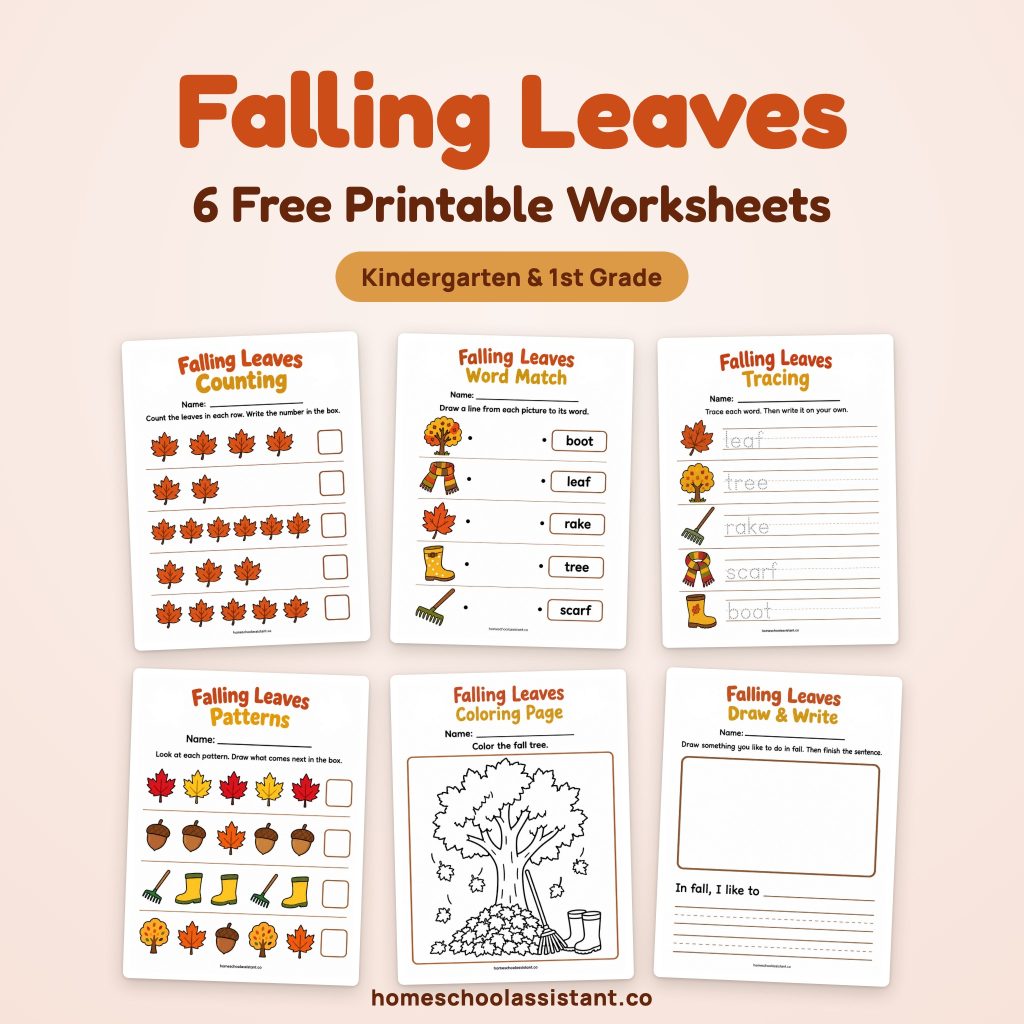
These free fall leaves printables turn the first days of autumn into a week of real learning. The six worksheets cover counting, phonics, handwriting, patterns, coloring, and a little writing, all built around things kids notice this time of year: leaves, trees, rakes, scarves, and rain boots.
The set is made for kindergarten and first grade, and older preschoolers can do most of it with a little help. Each page is short, so it fits beside your other lessons.
Free for your family, co-op, or classroom. Prints on regular letter paper. Every page is checked for mistakes before we post it.
What's in the fall leaves printables
1. Counting leaves
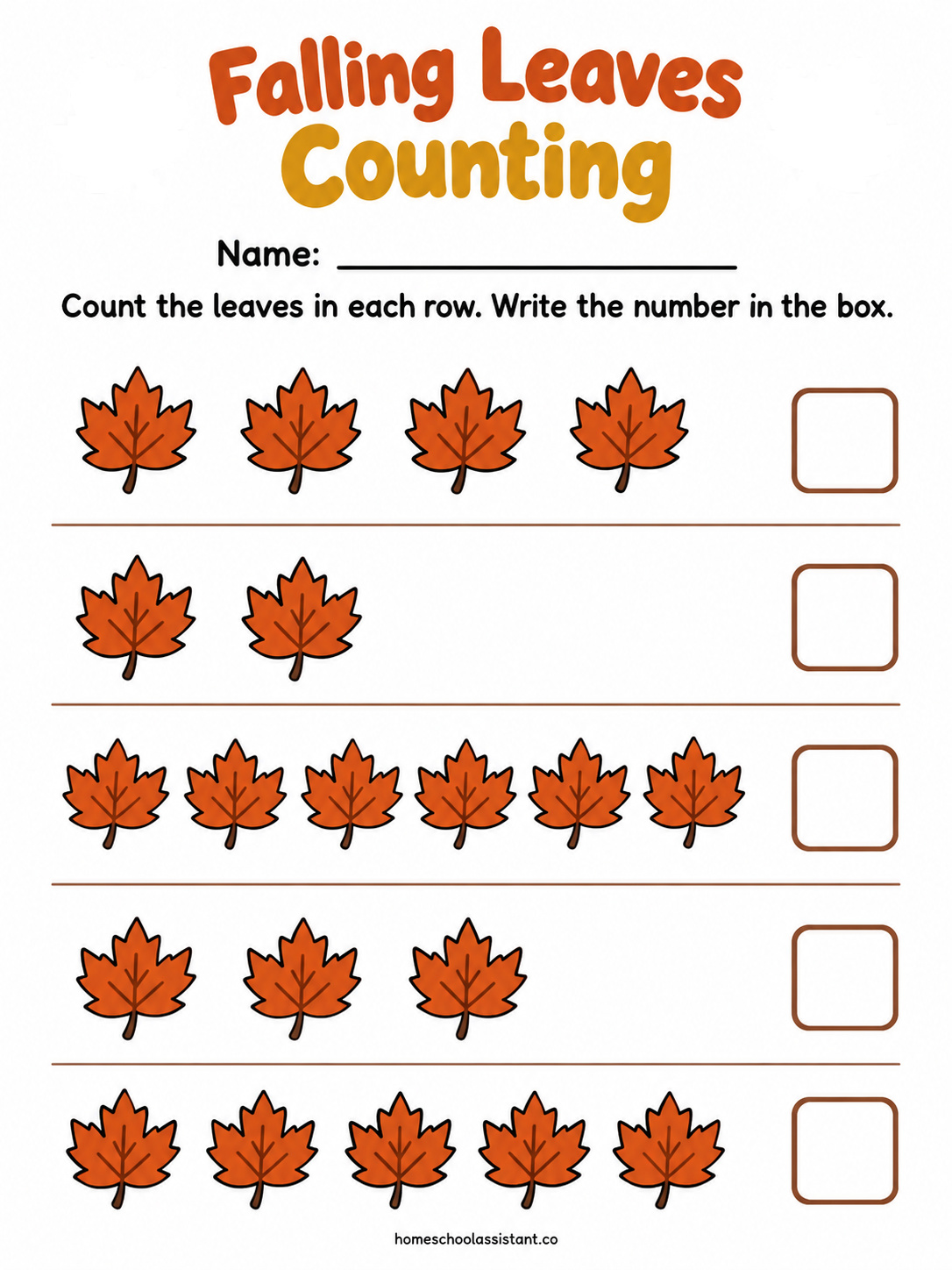
Five rows of maple leaves, two to six per row, in mixed order. Kids count each row and write the number in the box. Touching each leaf while counting builds one-to-one correspondence: one number for each object.
Make it easier: Put a real leaf or a small snack on each picture as your child counts.
Make it harder: Ask which row has the most leaves, or how many are in the first two rows together.
2. Word match
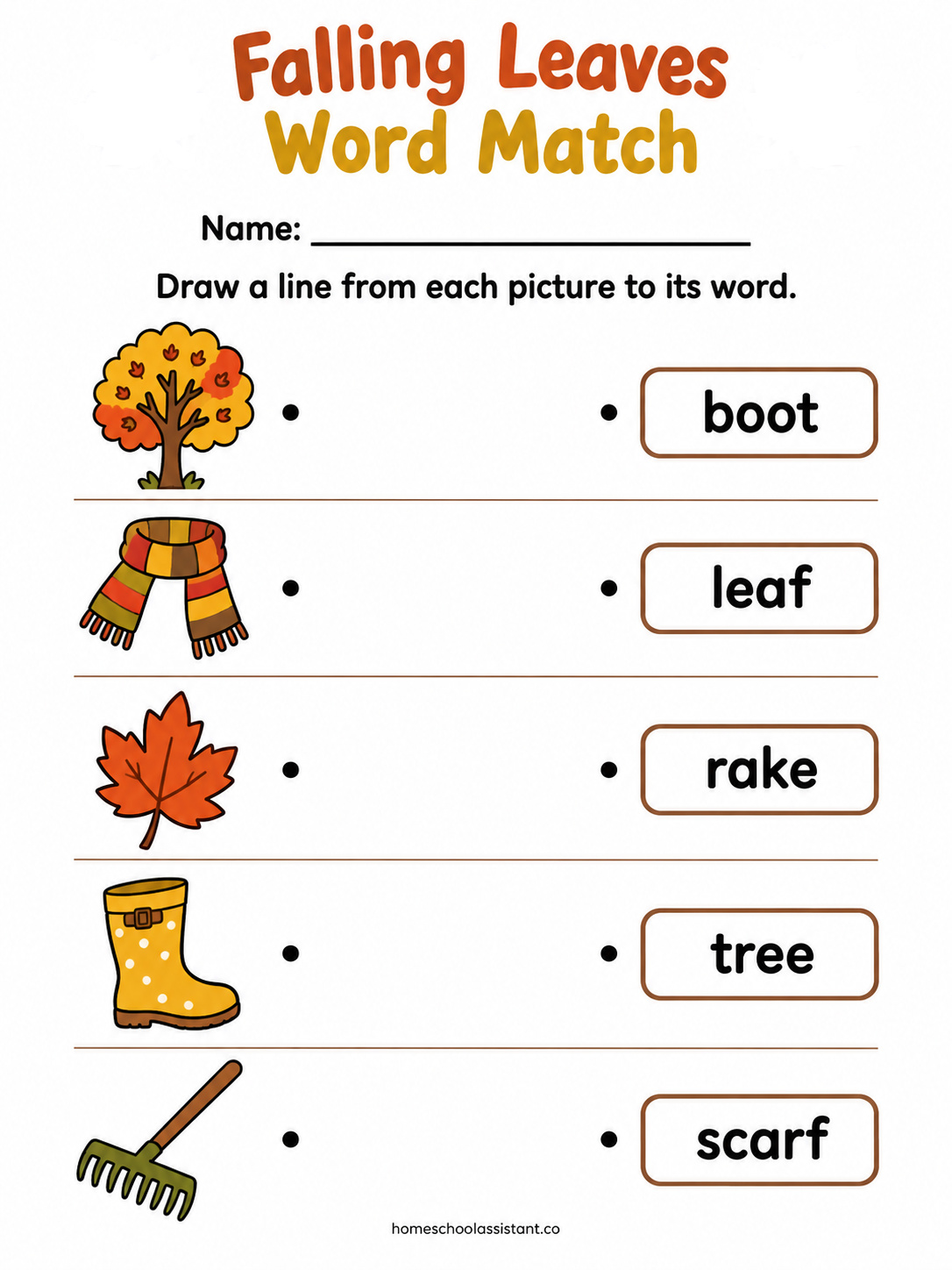
Draw a line from each picture to its word: leaf, tree, rake, scarf, and boot. Early readers can use the first letter as a clue, then check the rest of the word.
Make it easier: Read the five words aloud together first.
Make it harder: Cover the pictures and have your child read each word on its own.
3. Tracing
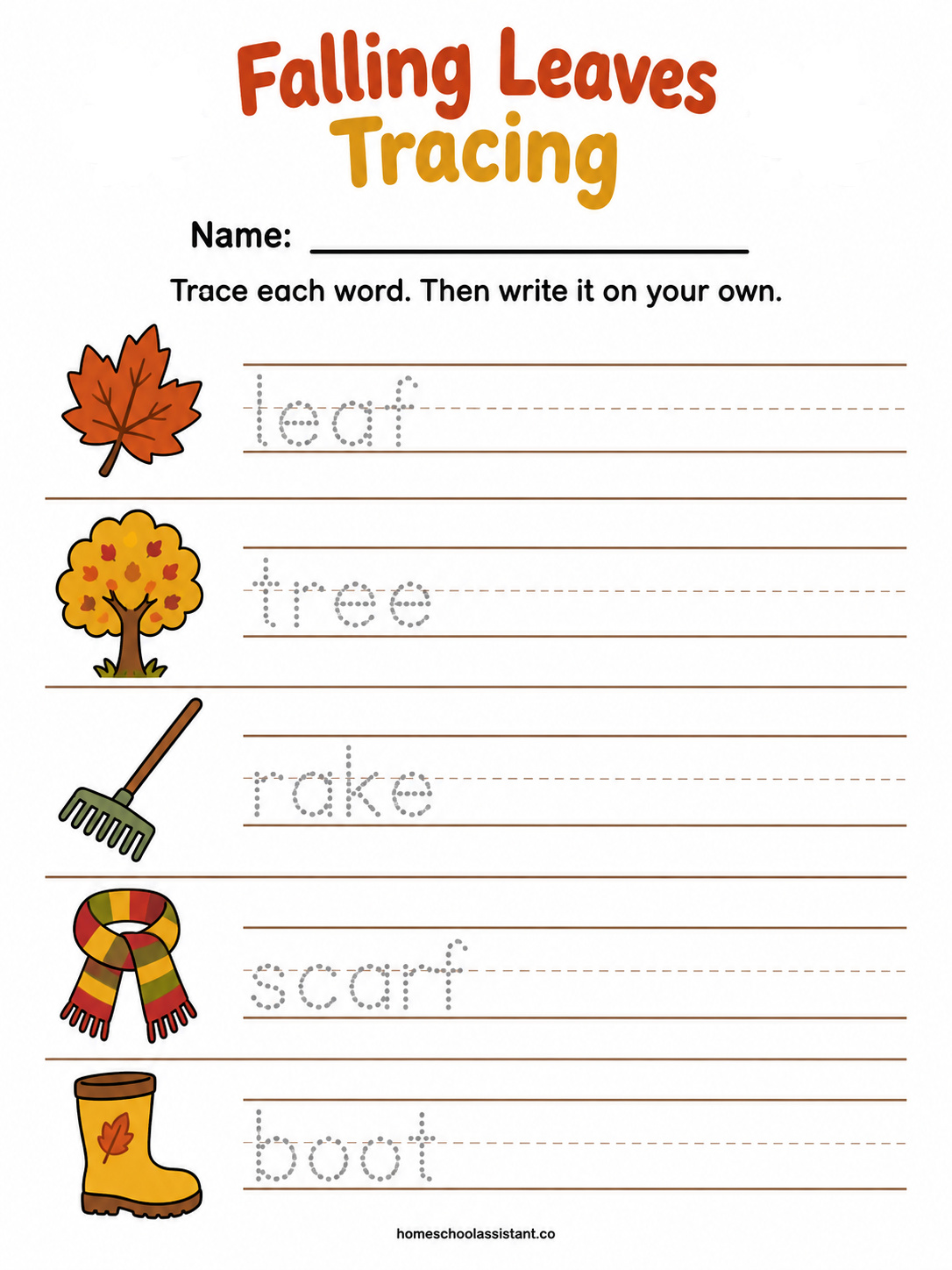
The same five words again. Kids trace each word, then write it on their own on the handwriting lines.
Make it easier: Trace with a finger first, or trace only the first letter of each word.
Make it harder: Write the words from memory on the back, then use two of them in a sentence.
4. Patterns: what comes next?
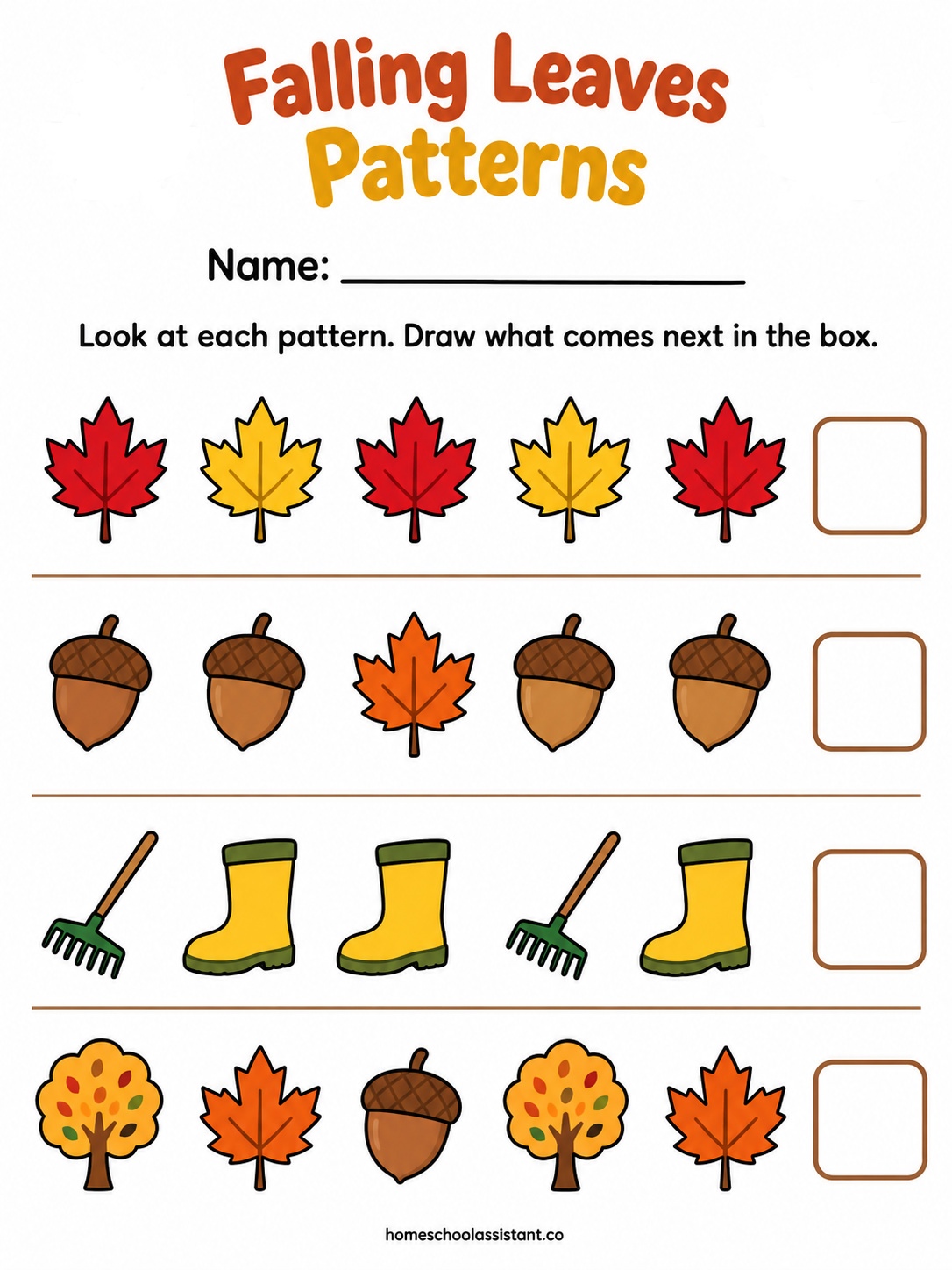
Four rows, each with a rule to find: red and yellow leaves, then acorns and a leaf, then a rake and rain boots, then a tree, a leaf, and an acorn. Kids draw what comes next in the box. The rows get harder as they go, from a simple two-color pattern to one that repeats three different pictures.
Make it easier: Build the first row with real red and yellow leaves before drawing it.
Make it harder: Have your child name each pattern (AB, AAB, ABB, ABC) and invent a new one.
5. Coloring page
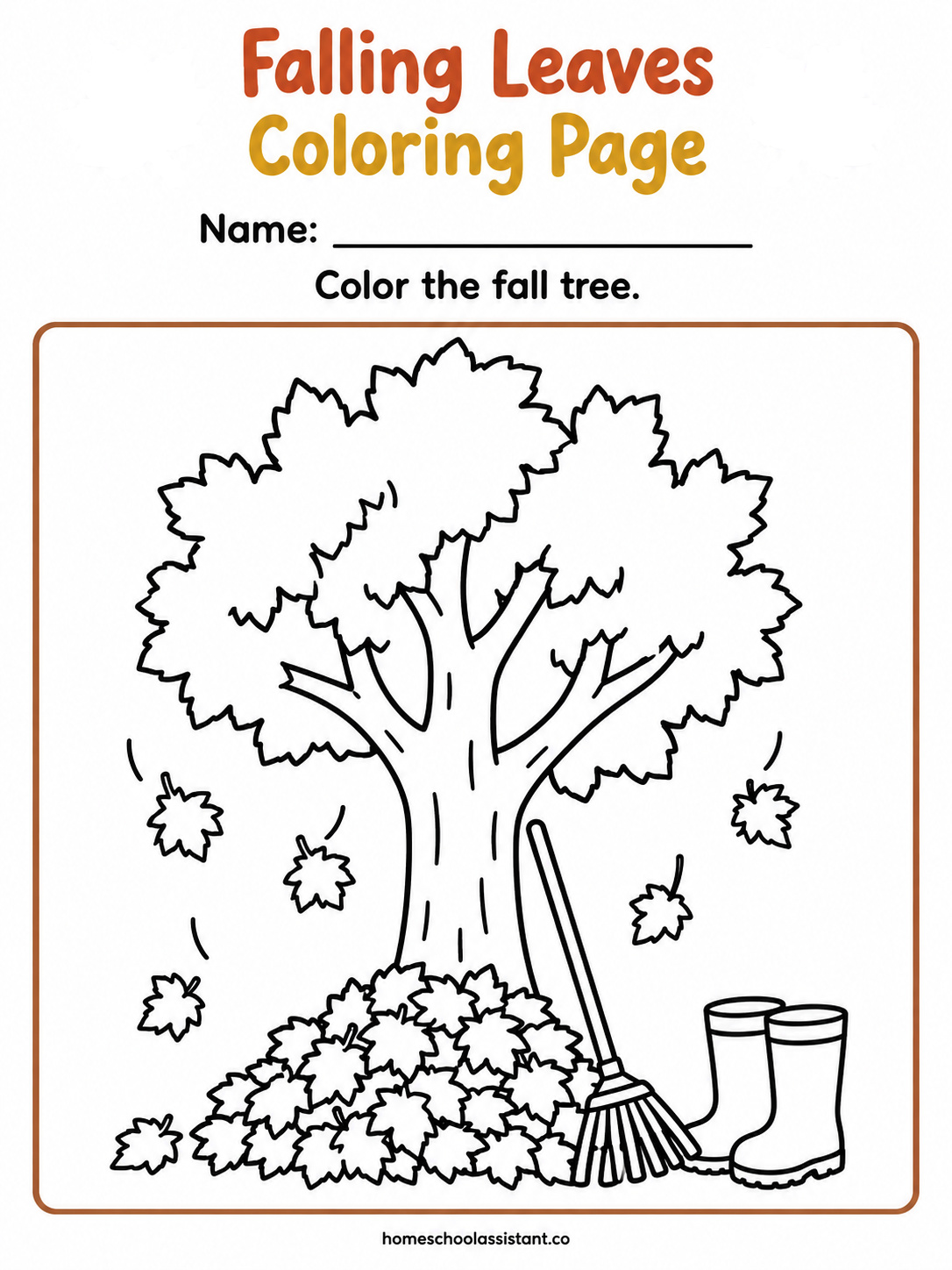
A fall tree over a big pile of leaves, with a rake and rain boots. Coloring inside the lines works the same small hand muscles kids use to hold a pencil, and it’s a calm page to end the week on.
Make it harder: Color the leaves in a pattern, like red, orange, yellow.
6. Draw and write
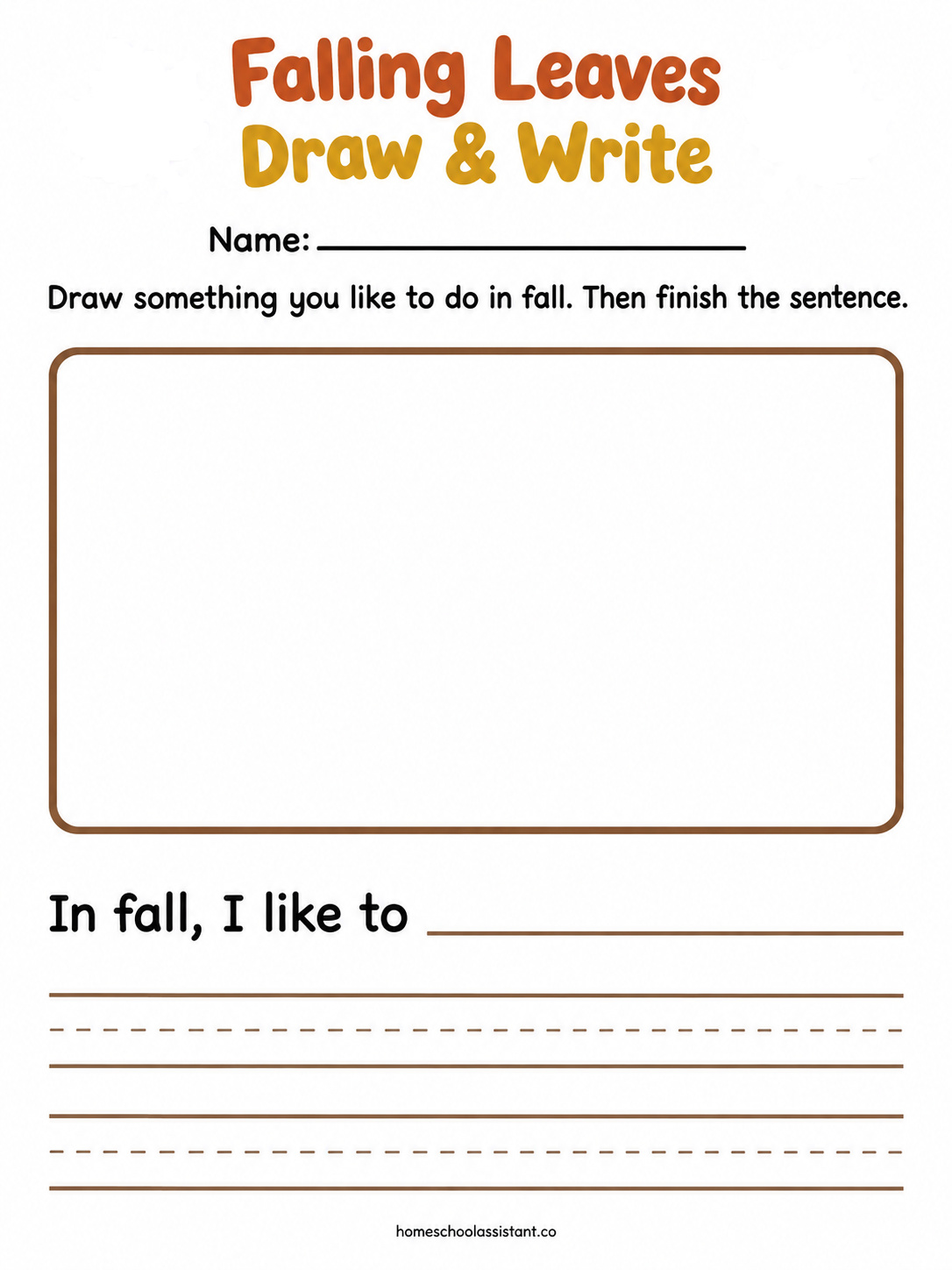
Kids draw something they like to do in fall, then finish the sentence “In fall, I like to…”. The drawing gives them something to write about, which makes a first sentence much less scary.
Make it easier: Your child says the words, you write them lightly, and they trace over your writing.
Make it harder: Write two or three sentences, each with a capital letter and a period.
What kids practice with these fall worksheets
- Counting and writing numbers. Kindergarten math usually includes counting a group of objects to answer “how many?” and writing numbers up to 20. This set practices both, up to six.
- Phonics. The five words hold several patterns worth pointing out: ee in tree, oo in boot, ea in leaf, the silent e in rake, and ar in scarf.
- Handwriting. Tracing first, then writing the same words alone.
- Patterns. Four kinds, from AB to ABC. Spotting a rule and continuing it is an early building block for math.
A simple 5-day fall leaves plan
- Monday: Go on a leaf hunt and bring a handful home. Do the counting page.
- Tuesday: Read the five words together, then do the word match.
- Wednesday: Do the tracing page and point out the vowel pairs in tree, boot, and leaf.
- Thursday: Line up your real leaves in color patterns, then do the patterns page.
- Friday: Color the fall tree and finish the draw-and-write page. Date it and keep it for your homeschool portfolio.
Using the set in preschool, kindergarten, and first grade
Preschool: Focus on counting, coloring, and the first two pattern rows. Skip the writing, or let your child tell you the words.
Kindergarten: The whole set works as written.
First grade: Use the “make it harder” ideas above and ask for full sentences on the last page.
Why do leaves change color?
Leaves are green because of chlorophyll, which helps a tree make food from sunlight. When fall brings shorter days and cooler nights, trees stop making chlorophyll. As the green fades, yellow and orange colors that were in the leaf all along start to show. Some trees, like many maples, also make brand-new red colors in the fall.
Fall leaf books to read with this set
- Leaf Man by Lois Ehlert
- Fletcher and the Falling Leaves by Julia Rawlinson
- We’re Going on a Leaf Hunt by Steve Metzger
- Why Do Leaves Change Color? by Betsy Maestro
Printing tips and answer key
- Print on regular 8.5 x 11 inch paper and choose “Fit to page” if your printer asks.
- Slip the counting, tracing, and patterns pages into a sheet protector and use a dry-erase marker to reuse them.
- Use cardstock for the coloring page if your child likes markers or paint.
Answers: Counting, top to bottom: 4, 2, 6, 3, 5. Patterns, top to bottom: yellow leaf, orange leaf, boot, acorn.
Want every set in one place?
Sorted by season and topic, with one-click downloads.
Plan the rest of your homeschool week
Homeschool Assistant helps you plan lessons, track each child’s progress, and celebrate the wins, all in one place. You can start free.

Written by
Learn about Homeschool Assistant →